A roof may look like a simple exterior covering, but its strength depends on several hidden layers. One of the most important is the roof deck, also called roof sheathing. This structural surface sits over the rafters and supports the underlayment and roofing material. When the deck becomes weak, wet, or deteriorated, installing new roofing shingles over it will not solve the underlying problem. Understanding roof decking replacement can help homeowners prevent leaks and structural damage.
Because the decking is usually concealed, many homeowners do not realize it has failed until a roofer removes the old roofing material. However, warning signs may appear inside the attic, along the roofline, or around recurring leak areas. Knowing what to look for can make the difference between a controlled repair and a more expensive restoration. The following guide explains the damaged roof decking signs that deserve attention and how a qualified contractor determines the right solution.
What Roof Decking Does for Your Home
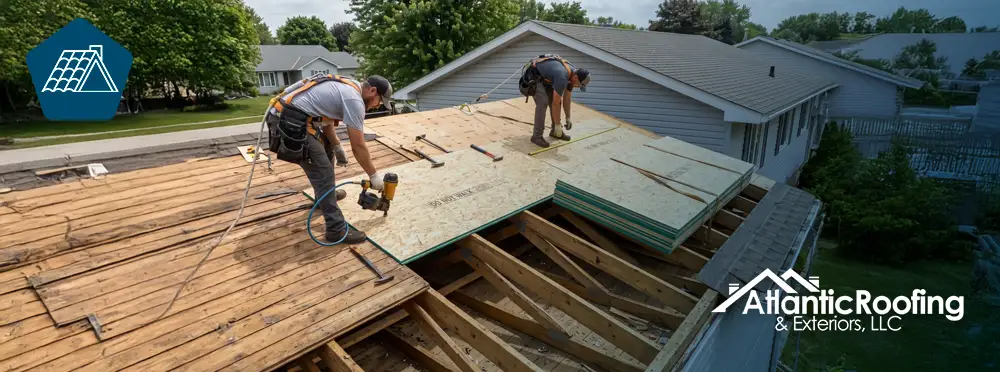
Roof decking creates the solid base that connects the roofing system to the home’s structural framing. It helps distribute weight, supports roofing shingles or metal panels, and provides a surface for underlayment and fasteners. Common decking materials include plywood and oriented strand board. Regardless of material, the deck must remain dry, stable, and properly secured for the roofing system to perform as intended.
When moisture reaches this layer, the material may swell, soften, delaminate, rot, or lose its ability to hold nails. These roof sheathing problems can reduce wind resistance and allow sections of the roof covering to move. In Florida, where roofs face intense sun, heavy rain, and humidity, hidden moisture damage can progress quickly. A strong exterior material is valuable, but it cannot compensate for a weak structural base underneath.
Visible Sagging or Uneven Rooflines
A roofline should appear straight and consistent when viewed from the ground. Dips, waves, or sagging areas may indicate that the decking has lost strength or that the framing below it is under stress. Sagging should never be treated as a cosmetic issue. It can signal prolonged water exposure, excessive weight, or poor ventilation. A noticeably uneven roof surface is one of the clearest reasons to contact a roofing professional.
Inside the attic, look for decking that bows downward between rafters or feels soft near stained areas. Do not walk on questionable surfaces. A roofer can inspect the area safely, determine whether the problem is limited to a few panels, and explain when to replace roof decking rather than attempting a superficial patch. Early action can help protect insulation, ceilings, and framing from additional moisture.
Leaks, Water Stains, and Attic Moisture
Water stains on ceilings or attic wood often point to a roofing-system failure, but the visible stain may be far from the actual entry point. Moisture can travel along rafters before dripping into the living space. Repeated leaks in the same general area increase the likelihood of deteriorated sheathing. Dark discoloration, peeling surfaces, and mold-like growth are important moisture warnings that should not be ignored.
Not every leak requires complete roof decking replacement. Sometimes the source is damaged flashing, a failed pipe boot, or missing shingles. The key question is how long moisture has been present and how much decking has lost structural integrity. A professional inspection can separate an isolated roofing defect from widespread deck deterioration.
Soft Spots and Fastener Failure
Soft or spongy areas are common damaged roof decking signs. Roofers may notice them while walking the roof or after removing old materials during a replacement project. Indoors, homeowners might observe cracking ceilings or movement around a leak-damaged area. Soft decking generally means that moisture has weakened the wood fibers, making the panel less capable of supporting materials. Compromised structural strength requires more than a new shingle layer.
Fastener problems can also reveal hidden damage. Roofing shingles rely on nails driven into sound decking. If the wood has softened, nails may back out or fail to hold properly, which can contribute to lifted shingles and wind damage. During reroofing, contractors should evaluate whether the existing sheathing provides a secure fastening surface. Replacing affected panels helps ensure the new roofing system is attached correctly instead of being installed over an unstable base.
Rot, Mold, and Pest Activity
Rotten decking may look dark, crumbly, warped, or separated into layers. In advanced cases, a tool can penetrate the material with little resistance. Mold-like staining does not automatically prove structural failure, but it does indicate excess moisture that deserves investigation. The roofer should identify the water source and assess the deck, ventilation, insulation, and surrounding framing. Correcting only the visible symptom without addressing the underlying moisture source can lead to repeated damage.
Pests may also take advantage of wet or deteriorated wood. Insects and small animals can enter through damaged roof edges, openings, or softened materials, creating additional pathways for water. If pest activity appears together with leaks or rot, the area may require coordinated repairs. Effective roof decking replacement should include removal of unsound material, evaluation of nearby components, and correction of the conditions that caused the roof sheathing problems in the first place.
How Professionals Decide What Must Be Replaced
A reliable assessment starts with an exterior and attic inspection, followed by closer evaluation when roofing materials are removed. Contractors consider panel condition, moisture exposure, delamination, rot, fastener holding strength, code requirements, and the condition of adjacent framing. In many cases, only damaged sections need replacement. When deterioration is extensive or the existing deck does not provide a suitable base, broader replacement is the safest, smartest and most cost-effective option. Scope should be based on verified conditions, not guesswork.
Homeowners should request clear documentation of damaged areas and an explanation of recommended work. A detailed estimate should distinguish decking replacement from roofing shingles, underlayment, flashing, ventilation, and other components. Because concealed damage cannot always be measured before tear-off, the contract should also explain how additional decking is priced if discovered. This transparency helps homeowners understand what the project includes and reduces surprises once construction begins.
Choose a Local Roofing Team You Can Trust
Atlantic Roofing and Exteriors LLC serves Gainesville, Bradford County, Alachua County, Gilchrist County and Marion County with residential roofing and commercial roofing, roof repairs, maintenance, and emergency services. We are locally owned and operated, we also offer free estimates and provide financing options. Moreover, we take pride in 50 years of industry experience and certifications from leading roofing manufacturers. These qualifications can be valuable when you need a thorough roof system evaluation rather than a quick surface-level fix.
If you suspect damaged decking, delaying an inspection can allow moisture to reach insulation, ceilings, walls, and structural framing. Contact us to request a professional assessment and discuss whether repair, partial replacement, or complete roof decking replacement is appropriate for your property. In addition you can follow us through our social media profiles on Facebook and Instagram.
A well-planned project restores a dependable base beneath the finished roof and helps protect the long-term value of your home. Schedule a free estimate before the next storm exposes a hidden weakness.
You have not enough Humanizer words left. Upgrade your Surfer plan.