A roofing system depends on more than shingles, metal panels, or membranes to keep water outside. Some of the most vulnerable areas occur where the roof meets chimneys, walls, vents, skylights, valleys, and other penetrations. Flashing protects these transitions by directing rainwater away from openings. When roof flashing problems develop, however, water can bypass the exterior roofing materials and gradually enter the building.
Interior leaks caused by flashing are sometimes difficult to recognize because water can travel before becoming visible. A stain on a ceiling or wall may appear several feet from the damaged component responsible for the intrusion. Understanding common flashing leak signs and responding early can help property owners prevent deterioration of insulation, decking, drywall, framing, and other materials.
What Roof Flashing Does
Roof flashing is typically installed at transitions and penetrations where ordinary roofing materials cannot provide complete protection by themselves. It creates a controlled path that moves water toward the roof surface and drainage system instead of allowing moisture into joints. Properly installed roof flashing protection is especially important around chimneys, plumbing vents, walls, valleys, skylights, and roof edges.
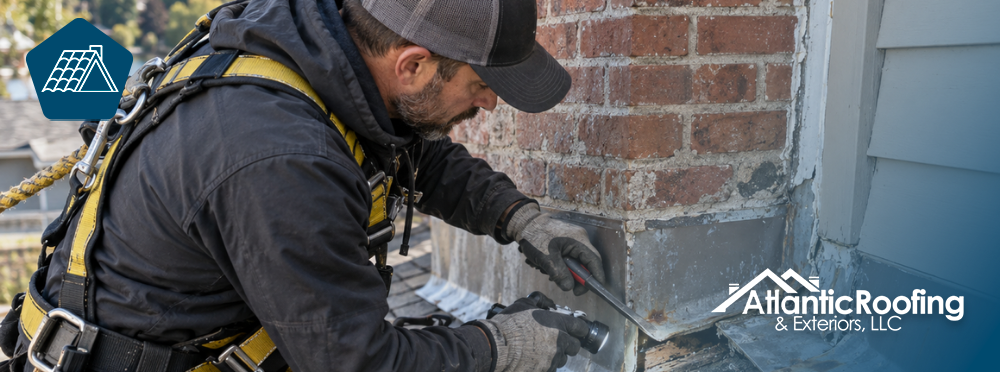
Problems begin when flashing becomes loose, bent, corroded, improperly sealed, or separated from surrounding materials. Damaged roof flashing can create small gaps that allow wind-driven rain to enter beneath the roof covering. Because these openings may be hidden from ground-level view, an apparently healthy roof can still develop significant moisture problems around vulnerable transition points.
How Flashing Problems Turn Into Interior Leaks
Once water gets beneath flashing, gravity does not always carry it directly downward. Moisture may follow decking, rafters, underlayment, pipes, or other components before reaching an interior surface. This explains why a roof leak around flashing can produce stains that appear far away from the actual exterior defect, making visual diagnosis more complicated than many property owners expect.
Repeated rainfall can gradually expand the affected area. Damp insulation may retain moisture, wood components can remain wet for extended periods, and drywall may eventually discolor or deteriorate. Addressing roof flashing problems before this progression occurs can reduce the scope of repairs and help preserve roofing components that have not yet been compromised.
Common Causes of Damaged Roof Flashing
Florida roofs experience strong sunlight, heavy rainfall, wind, humidity, and repeated temperature changes. Over time, these conditions can affect sealants and connection points around flashing. Damaged roof flashing may also result from improper installation, storm impacts, corrosion, movement between building materials, previous roof repairs, or fasteners that have loosened or deteriorated.
Another common issue occurs when roof components are replaced or repaired without properly integrating existing flashing into the new system. Applying excessive sealant over a deteriorated connection may temporarily hide the opening without correcting the underlying problem. Professional evaluation of roof flashing problems can determine whether resealing, fastening, partial replacement, or more extensive corrective work is required.
Flashing Leak Signs Property Owners Should Recognize
Visible water dripping from a ceiling is an obvious warning, but many leaks provide subtler clues first. Common flashing leak signs can include brown ceiling stains, peeling paint, damp drywall, musty odors, moisture around a chimney or vent, discolored attic materials, and recurring damp areas after heavy rain. These symptoms deserve attention even when active dripping stops after the weather clears.
Exterior warning signs may include lifted flashing, deteriorated sealant, corrosion, gaps along wall intersections, loose fasteners, or visible separation around penetrations. Property owners should avoid climbing onto steep or wet roofs to investigate these conditions themselves. A professional inspection can evaluate damaged roof flashing safely while checking nearby roofing components for additional sources of water intrusion.
Why Temporary Patches Are Not Always Enough
Roofing cement and sealants can be useful components of certain repairs, but repeatedly coating a flashing joint is not a substitute for identifying why it failed. Temporary patches can crack, separate, or redirect water to another area. If damaged roof flashing has lost its shape, position, or structural connection, simply adding another layer of sealant may not provide an appropriate long-term solution.
A professional contractor can determine whether the flashing itself should be repaired or replaced and whether surrounding roofing materials have also been affected. Correcting a roof leak around flashing at its source can help reduce repeated service calls, prevent continuing interior deterioration, and protect the overall performance of the roofing system.
Different Flashing Locations Require Different Solutions
Not all flashing serves the same purpose. Step flashing is commonly used where sloped roofing meets vertical walls, while counter flashing may protect masonry connections. Roof valleys, pipe penetrations, skylights, drip edges, and other details require their own installation methods. Because these assemblies work differently, roof flashing problems should be evaluated according to the specific location and roofing system involved.
A repair that works around a plumbing vent may not be suitable for a chimney or wall intersection. Experienced roofing professionals understand how water moves across different roof configurations and can evaluate whether flashing leak signs originate from installation issues, material deterioration, storm damage, or problems elsewhere in the surrounding roofing assembly.
Early Repairs Can Help Prevent Larger Interior Damage
Ignoring a small water stain can allow moisture to affect more than the roof. Prolonged leaks may damage ceiling materials, insulation, framing, paint, flooring, or personal property depending on where the water travels. Identifying damaged roof flashing early gives property owners an opportunity to correct the exterior problem before interior restoration becomes significantly more extensive.
Early intervention can also help determine whether moisture has spread beyond the immediately visible area. When a contractor evaluates a roof leak around flashing, the inspection can include nearby roof components and interior evidence to establish the likely pathway of water. This broader approach supports targeted repairs rather than relying on repeated guesswork.
Professional Roof Flashing Services From Atlantic Roofing & Exteriors LLC
Atlantic Roofing & Exteriors LLC provides residential roofing solutions and commercial roofing services throughout Gainesville and surrounding North Central Florida communities including Bradford County, Putnam County, Gilchrist County and Union County. Our services include roof repairs and maintenance, residential and commercial roofing, roof consultations, annual maintenance contracts, and 24/7 emergency roofing assistance. We also include roof flashing repair and replacement among our roofing solutions.
Furthermore, we bring more than 50 years of industry experience, local ownership and operation, free estimates, Florida roofing contractor license CCC1326702, manufacturer certifications, and experience completing more than 500 roofing projects annually. These resources give property owners access to professional support when roof flashing or other roofing components require evaluation.
Protect Your Property Before the Next Leak
The most effective way to deal with roof flashing problems is to address them before repeated water intrusion causes extensive damage. If you notice ceiling stains, moisture around vents or chimneys, deteriorated sealant, or other flashing leak signs, a professional roof inspection will help you determine the condition of the flashing and surrounding roofing materials.
Do not allow a small roof leak around flashing to become a larger roofing and interior repair. Taking action at the first sign of water intrusion can help protect your roof, preserve interior materials, and keep your home or commercial property prepared for Florida's demanding weather.
Contact us to request a free estimate and professional evaluation. In addition, you can follow us through our social media profiles on Facebook and Instagram to keep updated about our services.