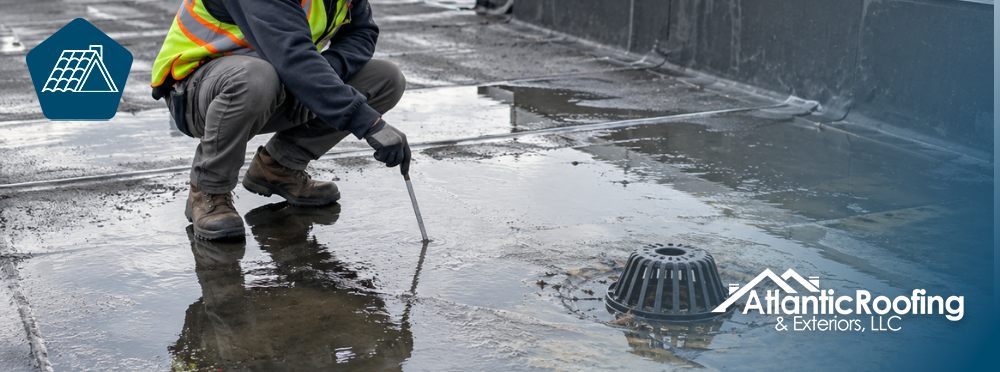
Water pooling on flat roof surfaces deserves attention when it repeatedly remains after rainfall instead of draining properly. A temporary puddle immediately after a Florida downpour does not automatically indicate roof failure, but persistent standing water can point to clogged drainage, inadequate slope, compressed insulation, or structural low spots. For homeowners and commercial property owners throughout Alachua County, Bradford County, Union County, Levy County, and Marion County, identifying the underlying cause early can help prevent a drainage problem from developing into membrane deterioration, saturated insulation, or an interior leak.
When Water Pooling on Flat Roof Surfaces Becomes a Concern
Persistent ponding is different from normal post-rain moisture. Flat roofs are designed with drainage in mind even though they appear level from the ground. Water should move toward drains, gutters, or scuppers rather than continuously collect in depressions.
The supplied roofing guidance identifies water remaining for roughly 24 to 48 hours as a warning sign that deserves closer attention. Rather than judging the roof immediately after a thunderstorm, property owners should observe whether the same areas repeatedly hold water well after surrounding surfaces have dried.
Recurring pools are particularly important because they can reveal a problem below the visible membrane. A low area may result from deteriorated insulation, deck movement, poor drainage design, or structural sagging rather than the roofing surface alone.
Flat Roof Drainage Problems That Cause Standing Water
Flat roof drainage problems usually have an identifiable underlying cause. Leaves, branches, dirt, and other debris can obstruct drains and scuppers, reducing the roof's ability to shed rainwater efficiently. This is especially relevant where storms deposit organic material onto commercial and residential roofs.
Poor slope is another possible cause. A flat roof is not intended to function like a perfectly level platform. Its drainage design should direct water toward designated outlets. If installation details, building movement, or previous repairs interfere with that drainage path, low areas may develop.
Compressed insulation and structural movement can also create depressions. Once a low spot begins collecting water, the additional load may make an existing problem worse. That is why simply removing the visible water does not necessarily correct the underlying condition.
Property owners experiencing recurring drainage concerns can learn more about flat roof systems and professional evaluation options before deciding whether repair, drainage correction, or broader restoration is appropriate.
Ponding Water Roof Issues That Can Develop Over Time
Ponding water roof issues can affect more than the roof's appearance. Standing water adds weight to the roofing assembly while keeping vulnerable areas continuously exposed to moisture.
One inch of water covering 100 square feet represents hundreds of pounds of additional load, according to the reference information supplied for this article. The practical concern is not that every puddle will create structural failure, but that persistent water can place unnecessary stress on an assembly that may already have a low spot or weakened component.
Long-term exposure can also accelerate deterioration around seams, flashings, penetrations, and previously repaired areas. Dirt carried into the pool can accumulate as water evaporates, while stagnant areas may encourage algae or vegetation.
These symptoms should be treated as evidence to investigate the roof rather than simply clean away the water and assume the problem is solved.
How Standing Water Roof Damage Affects Roofing Materials
Standing water roof damage can progress differently depending on the roofing system and its condition. TPO, PVC, modified bitumen, roof coatings, and other low-slope systems each have specific installation, seam, flashing, and maintenance requirements.
If the membrane becomes compromised, moisture may migrate beneath the visible roofing surface. Wet insulation can lose performance, and moisture reaching the deck can create more extensive repair requirements. Eventually, water may appear inside the building even though the original drainage problem began far from the visible ceiling leak.
For commercial properties, professional commercial roofing services can help determine whether ponding is associated with drainage components, membrane defects, insulation conditions, or a larger roofing-system problem.
Warning Signs That Your Flat Roof Needs Inspection
Recurring standing water is itself an important roof warning sign. Property owners should also watch for stains or discoloration around ponding areas, open or stressed seams, damaged flashing, bubbling or irregular membrane surfaces, vegetation growth, clogged drainage points, and water marks inside the property.
A ceiling stain or active drip can indicate that moisture has already moved beyond the exterior surface. In that situation, delaying an assessment may allow hidden moisture to affect insulation or decking.
Residents in Alachua County can explore local roof repair services, while property owners in Bradford, Marion, and Levy counties can also access dedicated regional roof-repair resources through the company's service network.
How Professionals Correct Water Pooling on Flat Roof Systems
The correct ponding-water repair depends on why the water is collecting. There is no single repair that is appropriate for every flat roof.
When debris is restricting drainage, cleaning and restoring the drainage path may solve the immediate problem. When a drain, scupper, or gutter is poorly positioned or damaged, drainage components may require professional correction. Low areas associated with insulation, deck conditions, or inadequate slope can require more substantial work.
If the membrane has already deteriorated, a roofer may also need to address damaged seams, flashing, penetrations, or affected roofing material. More extensive deterioration can make restoration or replacement a better long-term option than repeatedly patching symptoms.
A professional roof repair evaluation helps distinguish a maintenance issue from a roofing-system defect before a repair strategy is selected.
Preventing Future Ponding Water Roof Issues
Preventive roof maintenance can identify drainage problems before the next major storm exposes them. Keep drains and scuppers unobstructed, and periodically check roof surfaces for debris buildup, developing depressions, membrane damage, and changes around penetrations or flashing.
Inspections are particularly useful after severe weather or whenever drainage behavior changes. If an area that previously drained normally suddenly begins retaining water, the change itself deserves investigation.
Atlantic Roofing & Exteriors offers roof consultations and annual maintenance contracts for residential and commercial properties. Property owners can also review additional roofing services when evaluating preventive maintenance, repairs, restoration, installation, or replacement options.
Why North Central Florida Properties Need Reliable Roof Drainage
Florida rainfall makes dependable flat-roof drainage especially important. Properties across Alachua, Bradford, Union, Levy, and Marion counties can experience periods of heavy rain that quickly reveal blocked drainage points and existing low spots.
The priority after a storm is not simply whether water appeared on the roof. Property owners should consider where it collected, how deeply it accumulated, whether the same location repeatedly ponds, and how long the water remains.
For localized information, Alachua County property owners can review roof repair and maintenance guidance, while Marion County owners can learn more about roofing inspections.
When to Call Atlantic Roofing & Exteriors
Diagnose persistent water pooling before visible damage becomes a larger roofing problem. Atlantic Roofing & Exteriors is a locally owned Gainesville-area roofing contractor serving residential and commercial properties. The company reports more than 50 years of experience and works with shingle, metal, and flat roofing systems, including TPO, PVC, modified bitumen, and roof coatings.
Professional evaluation can help determine whether the problem involves drainage, roofing materials, insulation, structural low spots, or a combination of conditions. When an active leak or storm-related problem requires immediate attention, the company also offers 24/7 emergency roofing services.
Property owners ready to address recurring ponding can contact the roofing team to discuss inspection and repair options.
Follow Atlantic Roofing & Exteriors on Facebook and Instagram to see roofing projects across the region.
Frequently Asked Questions About Water Pooling on Flat Roofs
How long is too long for water to remain on a flat roof? Water immediately following rain can be normal, but recurring water that remains roughly 24 to 48 hours warrants attention because it may indicate inadequate drainage or a low area.
Can ponding water cause a flat roof to leak? Yes. Persistent moisture can increase exposure at vulnerable seams, flashings, penetrations, cracks, or damaged membrane areas, eventually allowing water to reach underlying components.
Can I fix flat roof drainage problems myself? Removing accessible debris may help with basic maintenance, but professionals should assess recurring ponding. Walking on a wet or damaged roof can also create safety risks and potentially harm roofing materials.
Does standing water mean I need a new roof? Not necessarily. The appropriate solution depends on the cause and condition of the roof. Some situations involve drainage maintenance or localized repairs, while extensive membrane, insulation, decking, or slope problems may require more significant work.
What should I do if the roof is already leaking? Protect the interior from additional water where it is safe to do so and arrange a professional assessment promptly. For active or urgent roofing problems, Atlantic Roofing & Exteriors provides 24/7 emergency roofing services for residential and commercial customers.