Myths Related to Metal Roof Leak Detection Services in Marion County
Metal roofs are known for durability, but they are not completely immune to water intrusion. In Marion County, heavy rainfall, humidity, intense sun, and seasonal storms can gradually affect seams, fasteners, flashing, and other vulnerable components. Understanding the facts about metal roof leak detection services helps property owners respond correctly instead of allowing common misconceptions to delay necessary inspections or repairs.
Leaks can also be deceptive because the location where water becomes visible indoors is not always where it entered the roof. Moisture may travel beneath panels, along underlayment, or through structural components before reaching a ceiling. Professional roofing contractors use a systematic approach to locate metal roof water intrusion, helping residential property owners and commercial property owners make repair decisions based on evidence rather than assumptions.
Myth 1: A Metal Roof Cannot Leak
Metal roofing offers excellent resistance to Florida weather when properly installed and maintained, but no roofing system is completely maintenance-free. Fasteners can loosen, sealants can deteriorate, flashing may become damaged, and roof penetrations can develop openings. Regular inspections and timely professional roof leak diagnosis can identify these problems before they develop into more serious roofing water damage.
Another misconception is that visible rust or major panel damage must appear before a leak becomes possible. In reality, a very small opening around a seam or flashing detail may allow significant moisture inside during wind-driven rain. Professional metal roof leak detection services examine both obvious and subtle weaknesses throughout the roofing system.
Myth 2: The Ceiling Stain Is Directly Below the Leak
Finding a stain does not necessarily mean the roof opening is located directly overhead. Water follows slopes and can move along decking, framing, insulation, or other materials before appearing indoors. Roofing contractors attempting to locate metal roof water intrusion must evaluate how moisture could travel through the complete roofing assembly.
Repairing only the area above the interior symptom can therefore result in repeated leaks. A professional roof leak diagnosis considers roof penetrations, valleys, transitions, flashing, seams, fasteners, drainage patterns, and previous repairs. This broader inspection increases the chances of addressing the actual cause instead of temporarily masking the evidence.
Myth 3: Infrared Technology Automatically Finds Every Leak
Advanced technology can support difficult roofing investigations, but thermal imaging is not a magic solution. Infrared roof leak detection identifies differences in surface temperatures that may indicate moisture retained within parts of a roofing assembly. Under appropriate conditions, these patterns can help roofing professionals narrow down areas that deserve closer investigation.
However, sunlight, insulation, roofing materials, weather conditions, and temperature changes can influence thermal readings. Infrared roof leak detection therefore works best as part of a larger diagnostic process that may include visual inspection, moisture evaluation, documentation, and targeted testing. Experienced interpretation remains essential when determining whether a thermal anomaly actually relates to water intrusion.
Myth 4: Adding More Sealant Always Solves the Problem
Roof sealant can be useful when applied correctly to an appropriate repair, but covering every suspicious seam is not an effective diagnostic strategy. Excessive patching may redirect water or make the original defect harder to identify later. Before repairs begin, contractors should first locate metal roof water intrusion and understand why the roofing component failed.
Proper diagnosis can reveal whether the solution involves a fastener, flashing detail, sealant joint, damaged panel, penetration, or another component. This is why professional metal roof leak detection services provide greater value than repeated guesswork. Targeted repairs can protect sound roofing areas while addressing the component responsible for the leak.
Myth 5: Professional Inspections Are Only Necessary After Major Storms
Storm damage is an important reason to inspect a metal roof, but problems can develop gradually as well. Thermal expansion, aging materials, maintenance issues, debris, and ordinary weather exposure can create small roofing vulnerabilities over time. Periodic inspections can identify potential concerns before the next major Florida storm tests the roof.
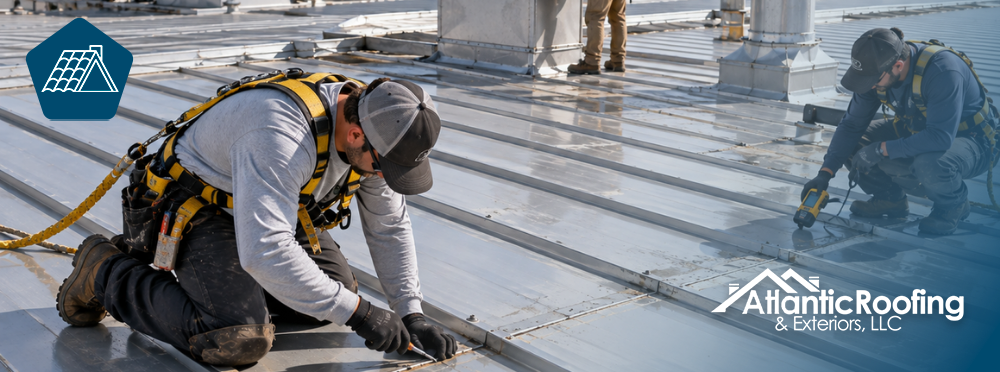
Atlantic Roofing & Exteriors LLC provides residential roofing services and commercial roofing solutions in different North Central Florida areas including Marion County. Our services include metal roofs, roof repair and maintenance, consultations, annual maintenance contracts, and 24/7 emergency roofing assistance. We also bring more than 50 years of industry experience, local ownership, free estimates, and Florida roofing contractor licensing.
Get Reliable Roofing Support in Marion County
Metal roof leaks should be approached with careful inspection rather than assumptions about where water entered or how serious the problem may be. Combining roofing experience with tools such as infrared roof leak detection can provide clearer information and support more appropriate repair decisions.
If you suspect moisture is entering your Marion County property, contact us for professional roofing assistance and a free estimate. In addition, you can follow us through our social media profiles on Facebook and Instagram to keep updated about our services.
An accurate professional roof leak diagnosis can help identify the problem early, protect surrounding materials, and reduce the risk of unnecessary or repeated repairs.
Certified Installer for the Leading Roofing Manufacturers
IKO Select Certified Installer

CertainTeed Select Shingle Master Installer

GAF Gold Elite Contractor
Atlas Pro Select Certified Installer